Friendships ruined by lies and cowardice, Amir, the protagonist in Khaled Hosseini's The Kite Runner struggles with his dishonest past. His life resembles the war zone of his Afghan childhood, where relationships and culture are violently ruined. It is not until late in the book when Amir gets a chance to redeem himself by saving the son of Hassan, his childhood friend.
Amir and Hassan grow up together as great buddies, spending all their free times together. Amir is Pashtun, and Hassan is Hazara. As the son of a rich Pashtun business man Amir is high in the social hierarchy. Hazaras are slaves, own nothing and make no money and have very few rights, and this is Hassan's place in society. Amir lives in the richest part of his neighborhood, gets what he wants, except his fathers approval as a worthy son. Thus he is a bit insecure. Hassan is comfortable with who he is, humble, obedient, and knows his place.
This wonderful friendship of these two kids of such different backgrounds shrivels and dies during the Kite Fighting Competition. As Amir's trusty Kite Runner, Hassan runs after the kite to secure a victory. Unfortunately, Hassan runs into the big, bad, Assef, the stories antagonist. He is a Pashtun German psychopath who carries brass knuckles and speaks admiringly of Hitler. Assef brutally assaults Hassan, physically and sexually. " He kept one hand on Hassan's back and undid his own belt buckle with his free hand. He unzipped his jeans. dropped his under wear." ... " Hassan didn't struggle." Amir watched all of it go down in vain and never did anything to disrupt it, or go to authorities to report it aftrwords. He never even told Hassan that he saw it either. His behavior is cowardly and he knows it. "In the end I ran. I ran becauseI was a coward. I was scared of Assef". He cannot live with the guilt of not defending his friend and schemes to have Hassan removed from his home so as not to see him, or have to deal with the awful episode any more. His father gave him money and a watch, and the first thing Amir did with it was hide it under Hassan's bed to frame him and accuse him of stealing. Hassan's reaction to this was true to his status as a Hazara, he just accepted the accusations and his fate.
Amir continues to live with this guilt into adulthood, while Hassan's life is cut short, murdered by Assef who becomes a general in the Taliban Government. While the two friends were never to meet again, Amir receives the chance to avenge his friend, save a life, and put his conscience at ease. In order to do this, he must go back to Afghanistan and face Assef, who not only killed Hassan and his wife, but has also imprisoned and raped Hassan's son, Sohrab. Finally an opportunity to do what is right, not be a coward and give up like he did all those years back. Amir is successful during a final battle in saving Hassan's son, though he nearly dies of a ruptured stomach and spleen and lungs, broken ribs, and many more sever injuries caused by Assef's brass knuckles, which he still carried with him.
The Kite Runner is a bitter sweet ending. Although Amir does recover Sohrab from Assef and the Taliban, and leaves Assef behind defeated, he can never bring his friend back. Amir's life is no longer a hell hole seeking a way to happiness and making things right. Now, he has found inner peace with himself kite fighting with Sohrab as he did with Hassan decades ago. From Amir to Hassan for all those years apart and finally finding each other again in a different form. He'd do anything for Sohrab, "For you, a thousand times over."
Thursday, November 6, 2014
Thursday, October 16, 2014
The Grapes Of Wrath Synthesis Page
The Grapes of Wrath
Beginning:
Nobody is used to the tough times and they are desperate, even the dog killed himself because he knows that these times are tough and unbearable.
"He raised his head, and looked across, and then started over"... " Didn't know how we was gonna feed him anyway"
Middle:
Everybody is trying to make the best out of the situation they are in right now. They have found a government camp that has every thing they need to live comfortably, hot water, running water, clean bathrooms, some work, no cops, and best of all, a good group of good human beings.
" she felt the hot water dripping from her chin, soaking through her dress."
End:
Life is going back to what it was before, running and living a horrible life, Tom killed someone, Casy died, and they have no money.
" 'You sleep' she said. 'You sleep off. I'll watch the door. Nobody won' get in.' "
Archetypes:
Tom: the man that means good but just keeps going wrong, kind of like the unfortunate protagonist.
Ma: She works for everybody but is not repaid, she just keeps losing her family to death. The unfortunate
Claim:
Grapes of Wrath is a very interesting story of looking for a good decent life for their family through a tough past.
Tuesday, October 14, 2014
The Grapes of Wrath
The Grapes Of Wrath by John Steinbeck is a sad story about the gritty travel to the west fleeing the dust bowl of Oklahoma during the slow and endless Great depression. Times were hard back then and Steinbeck made spot on metaphors to make the famine of food and opportunity come to life again. Of the many meaningful and true images and symbols he used throughout the story, which gave shape and character to the book, one specifically stood out to me.This metaphor in the story takes place at the beginning of the adventure. The Joad family stops for gas and water, and their dog walks aimlessly around the camp until he walks purposely onto the high way and gets smashed by a speeding car. He knowingly ended his life! This is an extremely powerful metaphor, it signals that nobody, not even the dog wants to live through this horrible, depressing time in American history. It also foreshadows dark times for the Joad family as many deaths will occur in their future.
This tale, I see through the metaphor of the dog's suicide, gave me a much better understanding of what life was like in this time and place. Hot, dry, lonely, hungry, and thirsty, and completely hopeless. The Joad Family lost their farm to a bank foreclosure because the dust bowl turned their land to waste. With the economics of the Great Depression, there was no opportunity for other jobs, so they were forced to leave the only home they knew, and travel west to California. They were hill billy desperate Okies that nobody liked. Everything was backwards and awful for the Joads. It was as if the dog knew this before hand and avoided such catastrophes. Grandpa died of heat stroke, grandma died of thirst, Preacher Casey gets murdered, and Tom winds upon the run for killing Casey's murderer. Again, the dogs death seemed to foretell this.
I love this book. It is an interesting history that taught me of what went on in America's horrible past. It also represented the manner people behaved in such such times while trying to survive and stay together as a family. Furthermore, it is a great reminder to me of the present, and how good I have it right now. When life gives you lemons, make lemonade, however, The Grapes of Wrath are still sour. So sour that the beloved family hound refused to endure it.
Tuesday, September 30, 2014
1984, By George Orwell
Beware of people with too much governmental power over you. They may abuse their power and make society a frightening and horrible place to live. This is what happens in the masterpiece 1984 by George Orwell. The totalitarian government led by Big Brother watches everything everyone does, twenty-four seven, with hidden cameras, telescreens, and spies. The main character Winston Smith, and his girlfriend Julia, learn what the Brotherhood does to people who think their own thoughts, experience their own emotions or disagree with the Party in any way. They torture people until they gladly comply with the rules of Big Brother. "Big Brother is watching you", forever and hard.What were Winston's crimes? The simple human need of writing a diary! This is not aloud, it is an expression his own ideas and emotions, something the Brotherhood cannot control, and if they can't control something, it is not aloud. Another of Winston's crimes was loving another human, Julia. Love is absolutely uncontrollable, love could lead to emotions and passions that could turn into revolt and the Party will stop at nothing to abolish it. Food, beverages, and literature are potential reminders of the past and are also a threat. However, the most asinine aspect of this dystopian society is that there are no laws against these acts. they will kill, such as they did to Julia, or even worse, torture, such as they did to Winston, one for braking one of these nonexistent laws. It is crazy. The Party kicked "his (Winston) ribs in his belly, on his elbows, on his shins, in his groin, in his testicles, on the bone at the base of his spine." They make people so frail, nauseatingly weak, and pathetically hopeless that they have no choice, either die, or agree with them. Most vile of all, they exploited person's phobias, this completely flips their mind into agreeing with every aspect of the government. They manipulate and control peoples minds and make them follow these confusing and inconceivable mottos :
"War is Peace,This propaganda just goes to show that the Party is selfish and wants to brainwash their citizens into believing these thoughtless thoughts. They want their soldiers to fight fight endless wars, The Party destroyed the past just as they destroyed Winston.
Freedom is Slavery,
Ignorance is Strength"
He was once a quiet man that loved to work in peace, though he was rightly paranoid that everyone was a potential spy or working for Big Brother. As the story continued, he grew into a confident man, he loved a women, and broke laws because he wanted to live and be nothing more than a human being. He feared becoming a brainwashed robot like so many others who believed the ridiculous sayings and mottos enforced by the disturbing government. He went so far as begin a revolt with the "revolution". He was becoming courageous, but sadly, the Party broke him and forced him into being a thoughtless vegetable who believed in the Brotherhood. The novel's final sentence: "I love Big Brother" is powerful and sad. Winston is gone.
Tuesday, September 16, 2014
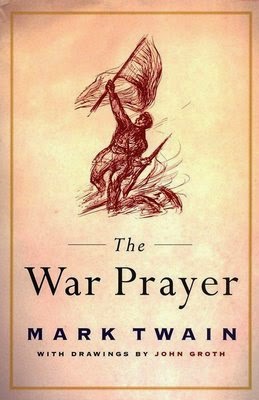
War Prayer By Mark Twain
Be careful for what you wish for. War Prayer, by Mark Twain, says just that. Written during the Philippine War, this thoughtful and philosophical story is a prayer for the victory of the American warriors that are leaving for battle. During the prayer, the priest is interrupted by an old cloaked man, who claims to be a messenger from "God" himself. "Is it one prayer?" the stranger asks, "No, it is two", he answers, meaning there is more to this prayer than meets the eye. This prayer is a double sided sword, in praying for their own victory they are also praying for the destruction of the other side. Not only will a country be destroyed in war, but soldiers will die, and their loved ones, families and friends, will be in distress, grieving and mourning."If you would beseech a blessing upon yourself, beware! lest without intent you may invoke a curse upon your neighbor at the same time."
Twain's opinion in this short story reflects the bad influence too much patriotism has on mankind. The men going into battle, and those whom prayed for their victory, never thought of the other side and the repercussions that would occur. "When you have prayed for victory you have prayed for many unmentioned results which follow victory." This blindness leads the fact that we treat other nations with without decency. Horrible actions occur in war and people are bound to die bloody gruesome deaths. “Lord our Father, our young patriots, idols of our hearts, go forth into battle — be Thou near them! With them — in spirit — we also go forth from the sweet peace of our beloved firesides to smite the foe. O Lord our God, help us tear their soldiers to bloody shreds with our shells; help us to cover their smiling fields with the pale forms of their patriot dead; help us to drown the thunder of the guns with the shrieks of their wounded, writhing in pain; help us to lay waste their humble homes with a hurricane of fire; help us to wring the hearts of their unoffending widows with unavailing grief; help us to turn them out roofless with their little children to wander unfriended in the wastes of their desolated land in rags and hunger and thirst, sports of the sun flames in summer and the icy winds of winter, broken in spirit, worn with travail, imploring thee for the refuge of the grave and denied it —" This is what they prayed for. This is what happens in battles. Afterward, the messengers wisdom was not excepted, the prayers dismissed him, the prayer was doomed.
I have never read anything like this, it is a parable I will remember. Mark Twain is bold and daring in his message questioning patriotism. The book was so controversial that his publisher rejected it, and it was not published until after his death. I can understand that many people disagree with this idea of un-patriotism, however, he isn't fighting patriotism, after all it is good to have some pride in your country, but too much can potentially make you naive to the consequences of such a strong fanatic beliefs, and that is what he despises. I had never thought of this before I read this. It has changed my view of war and overly proud nationalistic people, beliefs, and actions.
Subscribe to:
Posts (Atom)
